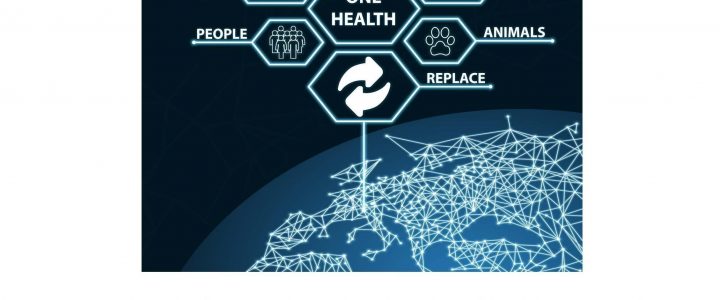
13-15 September 2023 @ University of Milano Bicocca
The role of 3Rs in the age of One Health: where we are and where we’re going
Please visit the website at the link.
13-15 September 2023 @ University of Milano Bicocca
The role of 3Rs in the age of One Health: where we are and where we’re going
Please visit the website at the link.

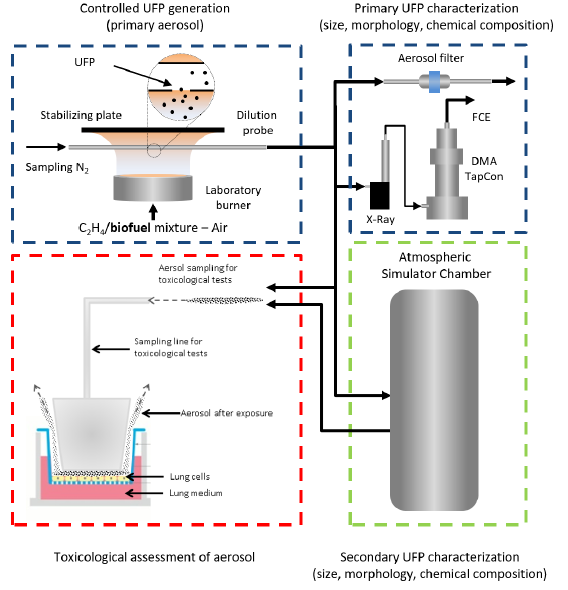
IT-BEST project aims to characterise the formation, the atmospheric ageing and the toxicological effects of ultrafine particles (UFP) resulting from the combustion of biofuels. Indeed, combustion processes involving biofuels may emit UFP that are actually different in size, chemical composition and health effects than those from conventional fossil fuels.
The special interest in UFP is related to evidence, currently available in the literature, that biofuels reduce the total particulate matter emitted, but simultaneously produce smaller particle size with a relevant number concentration, which are potentially more toxic.
Experimental measurements using an atmospheric simulation chamber, will be performed to determine the effect of different biofuels composition, on UFP numbers, size, chemical composition and their transformation under relevant atmospheric conditions as well as their toxicological assessment.
The expected outcome of the research project will result in a better the understanding of different nature and health-related toxicological effects of the carbonaceous particle formed during the combustion of biofuels.
Call: PRIN2022
Grant Agreement: 2022CH87SA
Project Coordinator: Dario Massabò (UNIGE) and Gianluigi De Falco (UNINA Federico II)
UNIMIB WP leader: Maurizio Gualtieri

BIOMAT – Open Innovation Test Bed for Nano-Enabled Bio-Based PUR Foams and composites
The POLARIS Research Center is involved in the European BIOMAT project, funded by the European Commission in the Horizon 2020 framework (Grant Agreement nr.) with the aim of establishing an Open Innovation Test Bed (BIOMAT-TB) with a Single-Entry Point (SEP) . The aim of this project is to accelerate a sustainable European bioeconomy through the development of nanomaterial-based and advanced polyurethane foams (PUR Foams) for various companies (building, construction, automotive, furniture, textiles).
Project ID:953270; Call ID: H2020-EU.2.1.3. – INDUSTRIAL LEADERSHIP – Leadership in enabling and industrial technologies – Advanced materials; H2020-EU.2.1.2. – INDUSTRIAL LEADERSHIP – Leadership in enabling and industrial technologies – Nanotechnologies
Project coordinator: Dr. Mariana Ornelas (CENTI)
Dissemination Manager: Dr. Pnina Dan (OSM-DAN LTD).
Partner UNIMIB – POLARIS Prof. Paride Mantecca is leader of WP7 – Recycling technologies, nanosafety and regulatory issues with specific focus on Nanosafety and toxicology (Task 7.2).
Further information can be found at the link.
Discover more on the project here!


The Interdepartmental Research Centre called “Environmental Health and Sustainability – POLARIS” aims to increase and integrate the state of knowledge in the following macro-areas of research:
Monitoring of air quality in indoor and outdoor environments and study of the impact on human and environmental health, with focus on the presence of air contaminants and the spread of pathogens.
Recent Projects:


To find out more, visit the dedicated page
Support for the development of safe, sustainable and innovative (nano)technologies, with assessment of their safety during the entire life cycle (circularity). Study of emerging contaminants, their impact on health and risk prevention and mitigation strategies.
Recent Projects:

To find out more, visit the dedicated page
Evaluation of the environmental, economic and social impacts of products and processes; development of environmental policies with a view to sustainability and circularity.
Recent Projects:
To find out more, visit the dedicated page
This section lists scientific publications prior to 2022.
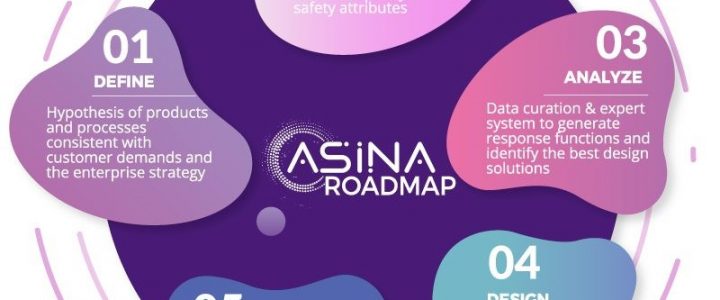
Il progetto Horizon 2020 ASINA (Anticipating safety issues at the design stage of nano product development) si propone di implementare strategie di “safe-by-design” per lo sviluppo di nanomateriali intrinsecamente sicuri, che siano a basso rischio, per la salute dell’uomo e dell’ambiente. ASINA è coordinato dal Cnr-ISTEC che vede la partecipazione di 21 membri, tra i quali centri di ricerca, università, SMEs, e oranizzazioni non governative (NGOs) europee e non, afferenti a 8 diversi Paesi europei. Il titolo della call alla quale abbiamo risposto è: “Safe for design: from science to regulation”.
Project Coordinator Prof. Anna Luisa Costa
Dissemination Manager Dr. Isella Vicini
Partner UNIMIB – POLARIS (Paride Mantecca) is leader of WP2 -MATERIAL SAFETY DESIGN CRITERIA, i cui obbiettivi sono:
Per informazioni: