- Allouche Y, Marchetti S, Bengalli R, Motta G, Pagliarulo L, Cazier F, Achard S, Fadel M, Mantecca P, Courcot D, Ledoux F, Verdin A, Gualtieri M. Comparison of submerged and air liquid interface exposure: limitations and differences in the toxicological effects evaluated in bronchial epithelial cells. Environ Res. 279 (2025). doi: 10.1016/j.envres.2025.121856.
- Bengalli R, Gualtieri M, Ornelas M, Tzanov T, Mantecca P. Adverse Outcome Pathways (AOPs) Oriented Approach to Assess In Vitro Hazard of Silica and Lignin Nanomaterials Derived from Biomass Residues. Nanomaterials (Basel). 2025 Apr 4;15(7):549. doi: 10.3390/nano15070549.
- Furxhi I, Perucca M, Baldi G, Dami V, Cioni A, Koivisto AJ, Bengalli R, Mantecca P, Motta G, Carriere M, Kose O, Nicosia A, Ravegnani F, Burrueco-Subirà D, Candalija A, Cabellos J, Vázquez-Campos S, Lahive E, Eagles E, de Ipiña JL, Oliveira J, Conin P, Zanoni I, Brigliadori A, Faccani L, Syed T, Haq EU, Mahony C, Serantoni M, Blosi M, Exner T, Costa A. The fruits of data shepherding: A collection of open FAIR datasets for titanium dioxide coated photocatalytic surfaces. NanoImpact. 2025 Aug 29;39:100583. doi: 10.1016/j.impact.2025.100583.
- Furxhi I, Mirzaei M, Costa A, Bengalli R. From literature to predictive modelling: Insights and machine learning applications from in vitro comet assays related to the genotoxicity of titanium dioxide nanomaterials. NanoImpact, 100562. doi: 10.1016/j.impact.2025.100562.
- Mosallaei M, Kärkkäinen E, Laurikainen P, Soundararajan CK, Saarimäki E, Paajanen M., Perelshtein I, Ivanova K, Ramon E, Tzanov T, Negrini B, D’Abramo C, Bonfanti P, Colombo A, Mantecca P.. Nano-engineering of a thermoplastic compound with CuO nanoparticles for the development of safe antimicrobial and anti-biofouling fish cage nets. RSC Advances, 15(26), 20944–20956 (2025). doi: 10.1039/d5ra02611c.
- Negrini B, Floris, P, D’Abramo C, Aldaghi SA, Costamagna M, Perucca M, Saibene, M, Perelshtein I., Colombo A., Bonfanti P., Mantecca P. Comparative toxicity and environmental impact assessments of sonochemically-synthesized CuO and Zn-doped CuO nanoparticles using zebrafish and LCA tools. Discover Nano, 20(1) (2025). doi:10.1186/s11671-025-04225-7.
- Persico A, Molteni L, Mantecca P, Kravicz M, Bragato C. Transgenic zebrafish embryos to evaluate the in vivo effects of different liposome-paclitaxel nanocarrier system. Sci Rep. 2025 May 26;15(1):18358. doi: 10.1038/s41598-025-00258-1. PMID: 40419515; PMCID: PMC12106770.
Author: sara.marchetti1@unimib.it
Plastics&Environment Conference – 1st announcement

The third edition of the interdisciplinary conference “Plastics and the Environment,” organized by the University of Milan-Bicocca and POLARIS Research Centre, builds on previous workshops held in Ravenna by the University of Bologna. It brings together experts to address key challenges related to environmental and socioeconomic sustainability, as well as the health implications of the “world of plastics.” Involving scientists from various disciplines, spanning chemical, biological, physical, social, and economic sciences, the conference will explore the monitoring and characterization of micro- and nanoplastics, their effects on ecosystems and human health, socio-cultural and educational strategies toward zero waste, the development of safe and sustainable materials, as well as degradation and mitigation approaches within the circular economy and the bioeconomy. The ultimate goal is to update on the cutting edge of various research fields while also promoting cross-disciplinary collaboration to better address innovation and sustainability.
Date: June 4-5, 2026
Venue: Università degli Studi di Milano-Bicocca, Aula Magna (Ed. U6), Piazza dell’Ateneo Nuovo 1.
Discover the scientific sessions and don’t miss all the useful information for participating in our conference.

Session 2 – Ecotoxicological and environmental impacts of plastics: emerging evidences and future challenges
Session 3 – Human exposure and adverse health effects of micro and nano plastics: unravelling the mysteries behind these ubiquitous threats.
Session 4 – Promoting Safe and Sustainable by Design, circularity and bioeconomy in polymers innovation
Session 5 – Climate-neutral cities and plastic. Rethinking practices, governance and politics for urban and environmental health
Organizing Committee
University of Milano-Bicocca, POLARIS Research Centre
Rossella Bengalli, Monica Bernardi, Paola Branduardi, Matteo Colleoni, Maddalena Collini, Mariaclaudia Cusumano, Maurizio Gualtieri, Alessandra Lama, Paride Mantecca, Valeria Mapelli, Riccardo Milanesi, Giulio Sancini, Giulia Terribile.
Scientific Committe
University of Milano-Bicocca: Paride Mantecca, Maurizio Gualtieri, Luca Ferrero, Francesco Saliu, Veronica Nava, Paola Branduardi, Immacolata Serra, Maddalena Collini, Giulio Sancini Monica Bernardi, Matteo Colleoni
University of Bologna: Elena Fabbri, Paola Valbonesi, Chiara Samorì, Andrea Facchin, Paola Galletti, Alessandra Landi
University of Milano: Marco Parolini, Lavinia Casati
Istituto di Ricerca Farmacologiche Mario Negri IRCSS: Paolo Bigini
For info please contact us at: polaris@unimib.it
For info about registration and abstract submission please visit the website of the conference: https://eventi.unibo.it/workshop-plastiche-ambiente
MEETmeSCHOOL

MEETmeSCHOOL activities, aimed at schools of all levels, aim to engage students in the scientific activities conducted by research groups. These initiatives are part of Citizen Science, an approach that promotes the direct participation of non-experts in the research process through co-design and co-creation.
Thanks to RESPIRO, POLARIS researchers will introduce Citizen Science as a research tool.
POLARIS activities within the MMS will take place in the early months of 2026 in schools in the Milan metropolitan area.
With RESPIRO, students explore the topic of air quality and its impact on our well-being, becoming protagonists in monitoring activities in school environments.
To learn more, visit the dedicated page!
RESPIRO – MeetMe@School
POLARIS, in collaboration with the Vita-Salute San Raffaele University (UniSR), is participating in the European MeetME@School program with a citizen science project for air monitoring using RESPIRO sensors developed within the MUSA (Multilayered Urban Sustainability Action) ecosystem.
The school-based activity, entitled “RESPIRO – Monitoring of Air Quality and Personal Exposure”, will include an awareness-raising presentation on air pollution and its effects on health, followed by the active participation of middle school students, who will be researchers as first-hand users of the low-cost sensors for monitoring particulate matter (PM10, PM2.5, PM1), gases (CO2, CO), and environmental parameters (temperature, pressure, and humidity) in indoor and outdoor school environments. The monitoring activity also includes the compilation of a daily diary to record events that may affect air quality. The data collected will be analysed by POLARIS researchers that will compare the data based on, for example, weather conditions, the location of the schools in the urban context, and in comparison with data collected by national and European bodies. They will then present the results to the schools during a feedback day.
The activity is ongoing in four schools throughout the Milan metropolitan area. Further details are available at the following link: https://www.meetmetonight.it/2024/wp-content/uploads/2025/09/PosterMM@school_rework_2025__02.pdf
MEETmeTONIGHT 2025

2025 marks the 20th anniversary of the European Researchers’ Night, the event promoted by the European Union that annually brings science to the general public, involving hundreds of cities across Europe. This year’s edition, scheduled for September 26 and 27, will see the participation of over 460 cities in 25 countries.
For the occasion, MEETmeTonight returns to Milan, two days of activities, meetings, workshops, and shows, open to everyone, hosted this year by the University of Milan, at Via Festa del Perdono 7 – in the heart of the city.
Join us for a face-to-face encounter with research and its protagonists!
Find out more about the planned activities and consult the complete program.
Heart of the program are the 5 European Missions – adaptation to climate change; fight against cancer; protection of oceans, seas, lakes and rivers; climate-neutral and intelligent cities; soil health – expressed in numerous activities involving professors, researchers and young PhDs.
Among the thematic pavilions dedicated to the 5 Horizon Europe Missions, on September 27th there will also be researchers from the POLARIS Research Centre, with a thematic pavilion entitled “Smart Cities and Health: Discover the Air We Breathe“.
The proposed activity aims to explore the topic of air quality from different points of view. The stand includes various instruments for measuring air pollutants, from scientific-level instruments to low-cost instruments, such as ‘smart’ sensors used by the POLARIS Interdepartmental Centre within the Open-Living lab of the MUSA – Multilayered Urban Sustainability Action project, funded by the European Union – NextGenerationEU, PNRR Mission 4 Component 2 Investment Line 1.5: Creation and strengthening of “innovation ecosystems”, construction of “territorial R&D leaders” (Spoke 1 – Urban Regeneration. City of Tomorrow, WP1).
From smart sensors that measure air quality to optical microscopes for close-up exploration of cells and tissues: an interactive participatory science experience to discover how pollution affects our breathing and daily well-being.
We look forward to seeing you at our pavilion!
RESPIRO

Real-time Environmental Sensing for Personal Intelligent Risk Optimization – RESPIRO
In a world where the quality of the air we breathe is increasingly at the center of attention, the idea of RESPIRO was born: an innovative, portable, intelligent and economical device, designed to help every citizen to monitor the surrounding environment and make informed decisions in real time.
RESPIRO is more than just a sensor: it is a knowledge and awareness platform that puts the power of science in the hands of every citizen
Born from an idea of the POLARIS Interdepartmental Research Centre of the University of Milan Bicocca, RESPIRO was developed within the MUSA project, by the University of Milan-Bicocca and by ROAD – Rome Advanced District, in collaboration with a specialized company in the sector, XEarPro Srl.
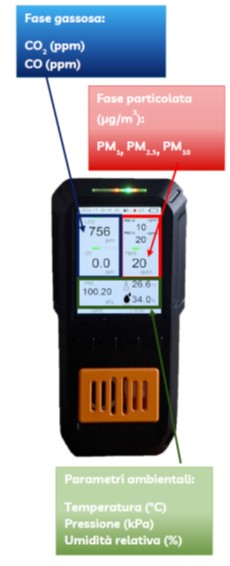
RESPIRO was designed to allow everyone to know in real time the air quality of every place, even inside buildings.
It is a device capable of detecting the presence of air pollutants such as fine and ultrafine particulate matter (PM10, PM2.5 and PM1), carbon dioxide (CO2) and carbon monoxide (CO) and integrating the data with information on temperature, humidity and atmospheric pressure. Being physically compact and wearable, it can check the characteristics of the air in multiple points, attaching to backpacks or jackets. Each number is georeferenced, transmitted to a central server in real time and projected on an LED display, where it provides the user with a detailed and immediate picture of the air quality of the environments in which they live.
The practical innovation of RESPIRO lies in the fact that the device can be used not only by scientists who are experts in air quality, but by anyone who wants to evaluate more conscious choices about their exposure to pollutants. By enabling participatory science approaches, it aims to improve the well-being of all through the active involvement of citizens, students and researchers who move around the neighborhoods. The data collected are integrated into a broader monitoring network, useful both to the scientific community and to the territory.
The final goal is not only to measure pollution, but to understand how urban policies and lifestyles can concretely improve public health. It is therefore an important step forward in the protection of health and urban sustainability, offering citizens an advanced tool for analyzing the surrounding environment.
Already tested in prototype form, the tool will thus allow everyone to have reliable data on risk areas available and identify behaviors for which more incisive interventions are necessary.
As part of a participatory science project, researchers from UNIMIB and ROAD have recently designed and implemented pilot campaigns in which workers and students monitored the air quality of the Bicocca district (Milan) and the Ostiense district (Rome) using the device.
The campaigns involved several phases:
We gave each volunteer a device, assigning a route and time slot in which to perform at least three repetitions of the dynamic monitoring (lasting approximately 1 hour) in the neighborhood of interest. Through guided routes, the volunteers were able to appreciate the spatial and temporal variations of the concentrations of pollutants in the neighborhood, actively contributing to the research.
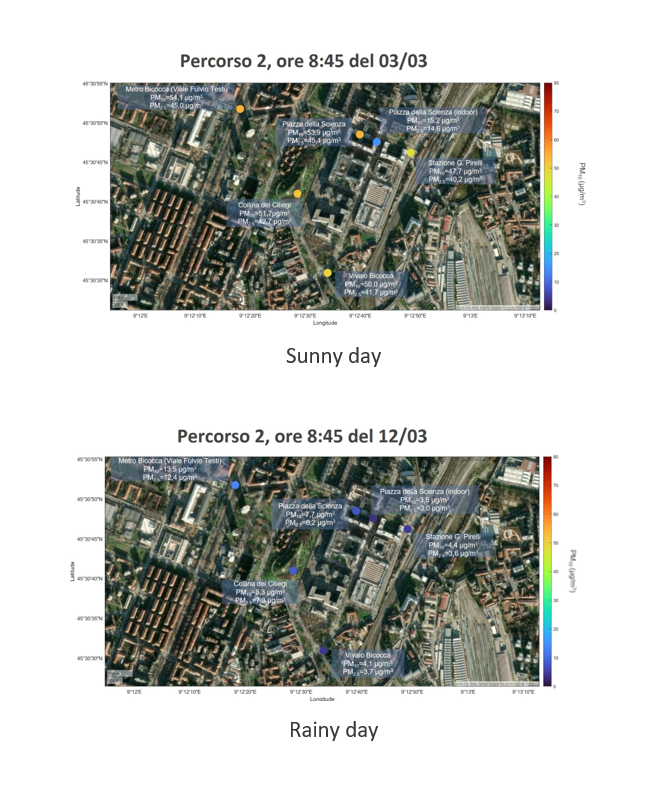
At the end of the campaign, data analysis allowed us to create maps representing the air quality of the neighborhood under study in different time slots and to appreciate any differences between days or time slots with different concentrations of particulate matter or meteorological situations.
The image below shows an example of the campaign carried out in the Bicocca district with data collected on two days with different weather conditions: sunny vs. rain.
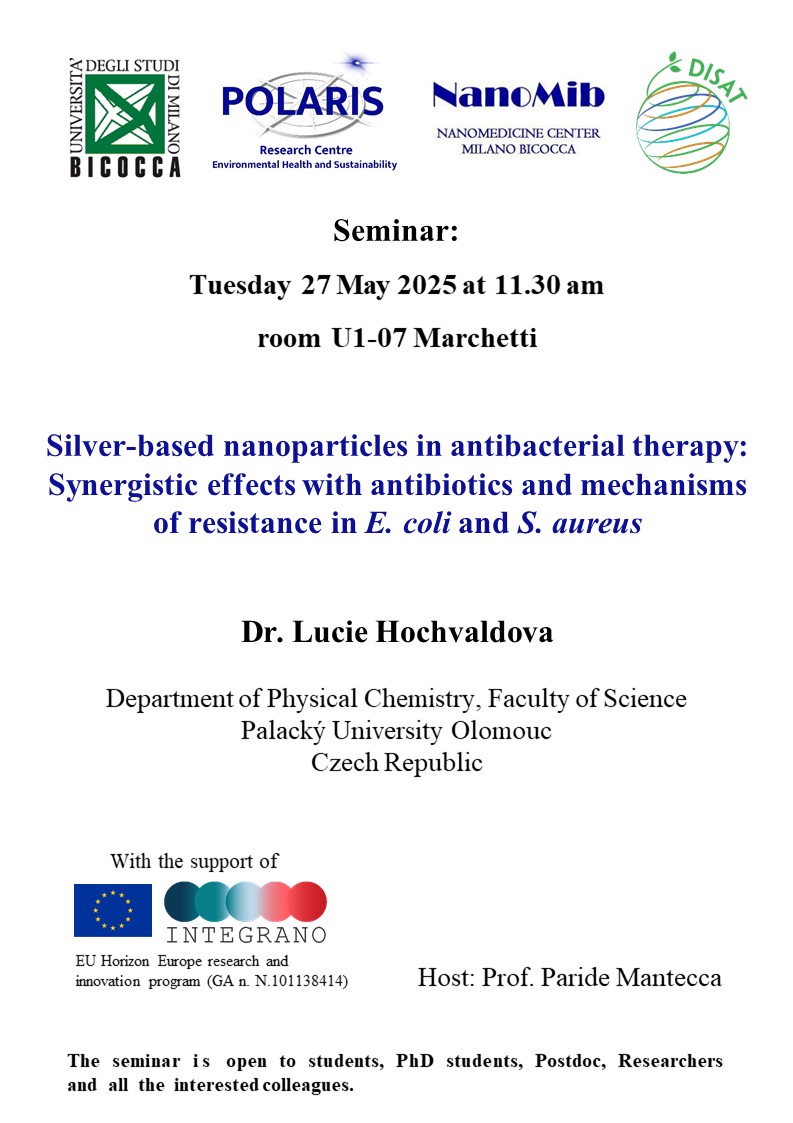
Seminar_May 2025

On Tuesday, May 27 2025, the POLARIS Interdepartmental Research Centre will host the seminar of Dr. Lucie Hochvaldova, Department of Physical Chemistry, Faculty of Science, Palacký University in Olomouc (Czech Republic), entitled:
“Silver-based nanoparticles in antibacterial therapy: Synergistic effects with antibiotics and mechanisms of resistance in E. coli and S. aureus“
The seminar will be held at 11:30 in room U1-07 Marchetti of the Department of Environmental and Earth Sciences (University of Milan Bicocca).
Host: Prof. Paride Mantecca.
The event is organized by POLARIS, in collaboration with the Nanomedicine Center (NanoMiB).
The seminar is sponsored by the European project INTEGRANO – Progetto EU Horizon Europe (GA No. 101138414).
The seminar is open to students, PhD students, Postdoc, Researchers and all the interested colleagues.
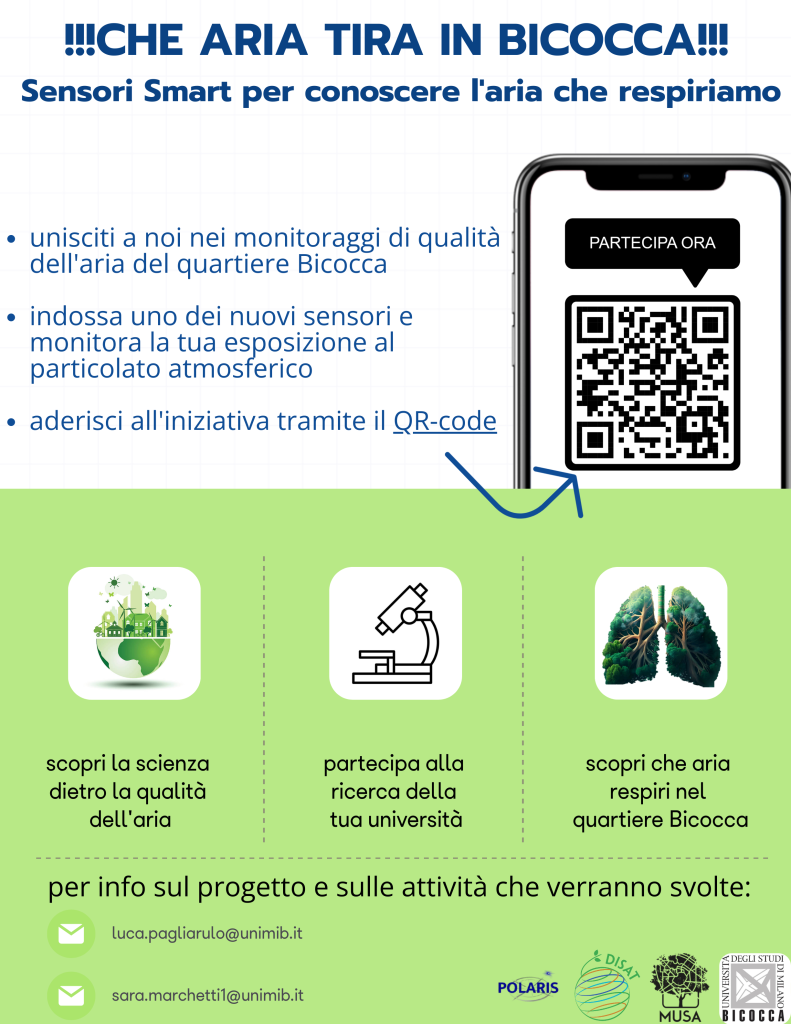
Join us to monitor the air quality in Bicocca!

The POLARIS Interdepartmental Research Centre is organizing, within the MUSA project, a monitoring campaign to evaluate air quality in the Bicocca district of the city of Milan.
The Project involves the use of low-cost sensors capable of estimating the concentrations of PM₁, PM₂.₅, PM₁₀, CO and CO₂ to evaluate the personal exposure of citizens within the Bicocca district and during travel to and from the University based on the environments frequented and their lifestyles.
The measurements carried out will allow to obtain a spatial and temporal representation of air pollution in the Bicocca district. Furthermore, they will also allow the study of the relationships between outdoor and indoor pollution.
Join the University monitoring network and participate in the research, we will involve you as soon as the activities start!
To join the initiative fill out the form:
https://docs.google.com/forms/d/e/1FAIpQLSfsu9lE55slyNDfc53BFfXGwCESJ9HpVE5gcMLaRboNwsUoBQ/viewform
For more information on the project and the activities that will be carried out in the coming months, contact Luca Pagliarulo (luca.pagliarulo@unimib.it) or Sara Marchetti (sara.marchetti1@unimib.it).
VINNY

Advanced nano encapsulation of bio-based pesticides and fertilisers for a circular and sustainable viticulture
VINNY is a highly innovative 4-years European funded project focused on sustainable viticulture.
The project aims to develop eco-friendly nanobiopesticides and nanobiofertilizers from grapevines and industrial by-products to reduce agrochemical use and promote healthier soils.
The ambition is to reduce the use of conventional agrochemicals by 50% by employing novel and bio-nanoprocessing ttechnologies to develop and encapsulate novel bioactives into biodegradable matrices, making them more effective and bioavailable.
The consortium is powered by 19 partners from Portugal, Spain, Austria, Italy, Denmark, United Kingdom, Israel, Belgium, Romania, and France. This partnership brings together the expertise of universities, research centres, SMEs, and large industries to create innovative solutions for viticulture.
The human and environmental safety of the newly developed nanobiopesticides and biofertilizers will be assessed with a focus on nanotoxicology and risk assessment, providing critical data to ensure the formulations are safe and sustainable, in line with EU regulations and Safe-by-Design (SbD) principles.
UNIMIB is leader of WP5, which aims to evaluate the safety assessment starting with studies of nanotoxicology, followed by LCA studies and the development of a Safe and sustainable by design (SSbD) platform to support the entire project.
Call: HORIZON-CL4-2023-RESILIENCE-01-34 – Advanced (nano and bio-based) materials for sustainable agriculture (RIA)
Grant Agreement: 101130039
Project Coordinator: University of Minho
UNIMIB WP leader: WP5 Leader
Further information can be found on the official project page or facebook page.
Discover Biomat Project results!

BIOMAT Project UCLM led by María Luz Sánchez Silva and a consortium of 25 entities developed sustainable bio-PUR foams with nanotechnology, ready to transform construction, automotive, and furniture industries. Innovation for a greener future.
A big step towards innovation! 🚀
For the past four years, BIOMAT has been at the forefront of sustainable innovation, transforming bio-based materials into game-changing solutions for industries across Europe. This video is a heartfelt look back at BIOMAT’s journey: four years of dedication, collaboration, and remarkable achievements.
Discover all the details of the results from our BIOMAT project and see BIOMAT’s Final Results Video here!
Visit our dedicated page to learn more about the project.