Project Title: New Integrated Methodological Approaches for the Assessment of the Safety and Environmental Sustainability of Advanced Nanostructured Materials
The procedure, based on titles and examinations, is called for the award of no. 1 Research Grant for cooperation in research activities, with a duration of 12 months, in the field of Environmental science (SDS BIO/06), for the following activities: evaluation of the toxic effects of new advanced nanomaterials using in vitro and in vivo biological models alternative to the use of mammals (zebrafish); development and application of new nanospecific characterization factors for determining the human and environmental hazard in LCA (Life Cycle Assessment) applications; implementation of quantitative methodologies in the Safe and Sustainable by Design (SSbD) framework for new advanced materials.
The position will be based at the University of Milano-Bicocca (Milan, Italy)
The position is well suited to a recent doctoral graduate with skills and interests in nanosafety and environmental impacts of new advanced materials, to sustain the SSbD framework.
The research is within the EU project INTEGRANO (Multidimensional Integrated Quantitative Approach to Assess Safety and Sustainability of Nanomaterials in Real Case Life Cycle Scenarios Using Nanospecific Impact Categories), HORIZON CL 4 2023 RESILIENCE 01 22 (GA n 101138414).
To disseminate the research carried out by the researchers of the MUSA project, the podcast “Sustainability and the city” was created, which aims to create a widespread and participatory culture on sustainability in the territory.
What does the MUSA project deal with?
MUSA – Multilayered Urban Sustainability Action, finanziato dall’Unione Europea – NextGeneration EU was born as a response to the challenges that our metropolitan reality faces and will face in the transition towards environmental, economic and social sustainability.
The project involves universities, companies and local authorities.
The podcast, curated by the Open Air Lab research team of the University of Milano-Bicocca, aims to answer the following question:
What is urban sustainability? And what can be done to achieve it?
The podcast brings together the voices and ideas of a large panel of experts to discover how Milan, an urban laboratory par excellence, can become a model city in terms of livability, economic sustainability, environmental responsibility and social justice.
The first season of the podcast involves biologists, economists, physicists, sociologists, lawyers, geographers and engineers from the following universities: Università degli Studi di Milano – Bicocca, Università degli Studi di Milano, Politecnico di Milano e Università Bocconi di Milano.
The various episodes discuss biodiversity and urban greenery, but also “access to the sky” to promote scientific education, social equity and inclusion to build a more democratic future, as well as active participation by citizens, for example in the design of squares and public spaces.
In the episode “Breathing Sustainability” Paride Mantecca, associate professor of Applied Biology at the University of Milan-Bicocca and Scientific Director of the POLARIS Interdepartmental Research Centre, intervenes.
Mantecca explains how, starting from the study of human biology in its relationship with environmental factors, the quality of air in urban environments has an impact on the health and well-being of citizens. In particular, he illustrates how research aims at the transformation of urban environments and how important citizen awareness is with respect to collective health and well-being.
This page provides an overview of the main research areas in which the POLARIS Interdepartmental Research Centre is involved.
AIR QUALITY AND HEALTH
Monitoring of air quality in indoor and outdoor environments and study of the impact on human and environmental health, with focus on the presence of air contaminants and the spread of pathogens.
Recent Projects:
INNOVATIVE, SAFE AND SUSTAINABLE TECHNOLOGIES
Support for the development of safe, sustainable and innovative (nano)technologies, with assessment of their safety during the entire life cycle (circularity). Study of emerging contaminants, their impact on health and risk prevention and mitigation strategies.
Recent Projects:
ENVIRONMENTAL ECONOMICS AND SOCIOLOGY
Evaluation of the environmental, economic and social impacts of products and processes; development of environmental policies with a view to sustainability and circularity.
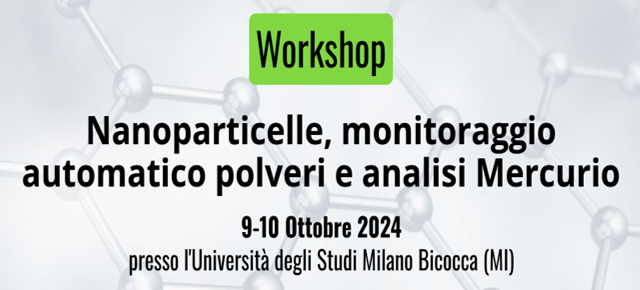
On Wednesday 9 October 2024 from 09:30 to 16:30 at the Department of Environmental and Earth Sciences of the University of Milan Bicocca, the workshop “Nanoparticles and automatic dust monitoring: instrumental solutions and applications for air quality” organized by XEarPro Srl will be held. The event is open to all interested researchers, technicians and sector specialists.
The program includes oral presentations with specific insights on the topic, and dedicated sessions with demonstration instrumentation to address operational issues related to maintenance, management, use, calibration, QA/QC procedures for measurements.
The event is organized by XEarPro Srl, in collaboration with Centro di Ricerca Interdipartimentale POLARIS, Dipartimento di Scienze dell’Ambiente e della TerraUNIMIB, MUSA (Multilayered Urban Sustainability Action) – Progetto Next Generation EU e PNRR, INTEGRANO – Progetto EU Horizon Europe (GA No. 101138414) and GRIMM AEROSOL TECHNIK.
The workshop will take place at the Department of Environmental and Earth Sciences of the University of Milan Bicocca, Piazza della Scienza 1, 20126 Milano. Participation is free, upon registration (max 40-50 participants).
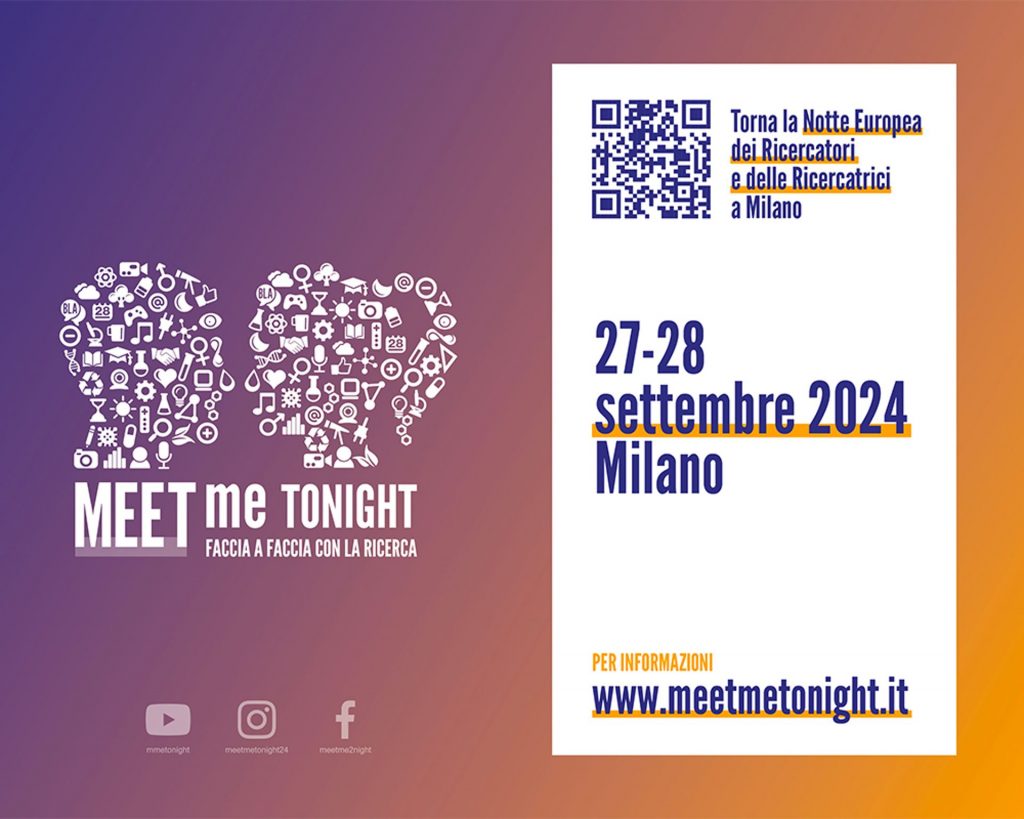
MEETmeTonight, the event dedicated to scientific dissemination during the European Researchers’ Night, returns to Milan. This new edition includes two days of free initiatives open to all ages with stands, talks, workshops and shows.
Heart of the program are the 5 European Missions – adaptation to climate change; fight against cancer; protection of oceans, seas, lakes and rivers; climate-neutral and intelligent cities; soil health – expressed in numerous activities involving professors, researchers and young PhDs.
The event is organized by 5 universities in Milan – University of Milan-Bicocca, University of Milan, Bocconi University, Polytechnic University of Milan and Vita-Salute San Raffaele University – and by formicablu. It is a unique opportunity to get closer to the world of research, science and innovation.
In this context, the POLARIS research centre will be present at the event with a thematic stand at the Science Park in Viale Sarca (near Bicocca Stadium). At the SC06 stand entitled “SMART SENS – test the quality of your environment!” the researchers will show their research activities to the public.
The proposed activity aims to explore the topic of air quality from different points of view. The stand includes various instruments for measuring air pollutants, from scientific-level instruments to low-cost instruments, such as ‘smart’ sensors used by the POLARIS Interdepartmental Centre within the Open-Living lab of the MUSA – Multilayered Urban Sustainability Action project, funded by the European Union – NextGenerationEU, PNRR Mission 4 Component 2 Investment Line 1.5: Creation and strengthening of “innovation ecosystems”, construction of “territorial R&D leaders” (Spoke 1 – Urban Regeneration. City of Tomorrow, WP1).
The public will learn how these instruments work and the main environmental monitoring techniques. Additionally, part of the experience also includes an in-depth look at the effects of these pollutants on our respiratory system.
In the afternoon, researchers from the POLARIS Centre will also be involved in the workshop entitled “What do you breathe in your neighborhood? Understanding the urban environment by walking” organized together with researchers from CEMTET (Research Center on Mobility, Tourism and Territory) which will be held in the U7 building (via Padre Gerardo Beccaro 20).
The workshop, aimed at adults and boys and girls aged 14 and up, offers a collective experience of observing the Bicocca district to explore its accessibility and inclusiveness. You can participate in this workshop in two time slots (14:00-16:30, 16:30-19:00). Sign up to attend: registration is required on Eventbrite at the link. There are 15 spots available for each time slot.
The quality of the air we breathe every day is often influenced by our lifestyle choices, which can determine the release of particles and other pollutants into the atmosphere, with a huge impact on our health.
The activity proposed by the workshop presents an interdisciplinary and interactive approach to explore the topic of air quality from different points of view. The proposal for an itinerant activity aims to collect data on the air quality of the neighborhood, also considering how different sources of pollutants in closed (indoor) and open (outdoor) environments or how mobility choices can affect personal exposure.
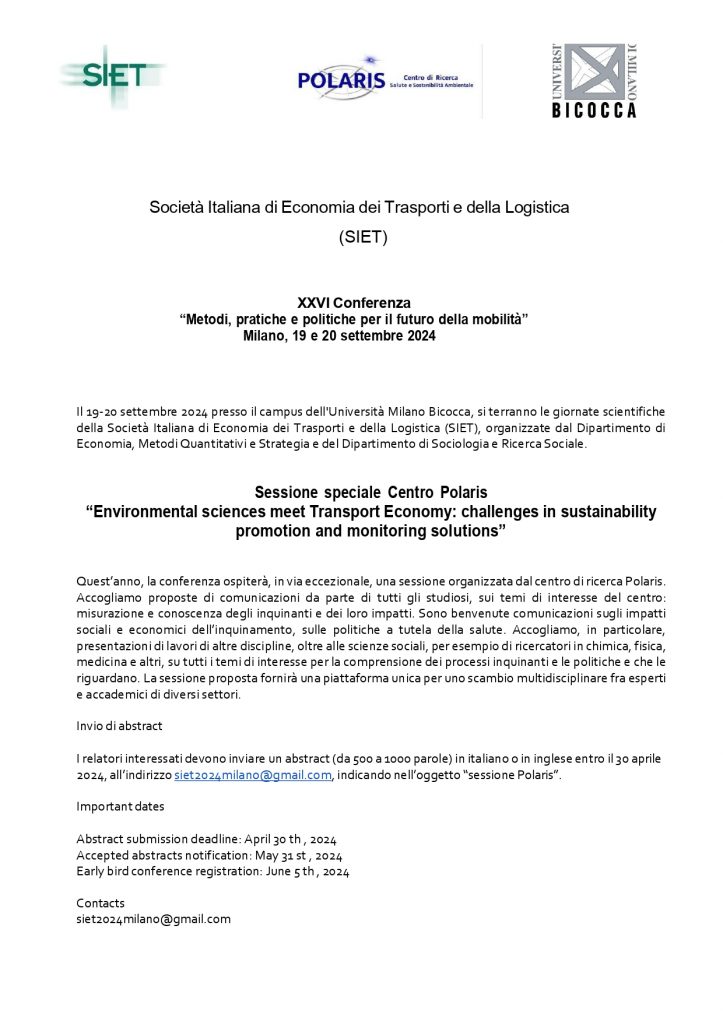
XXVI Conference “Methods, Practices, and Policies for the Future of Mobility”
On September 19 and 20 2024, the University of Milan-Bicocca will host the 26th edition of the Conference of the The Italian Society of Transport and Logistics Economists (SIET), entitled “Methods, Practices, and Policies for the Future of Mobility”
The conference is organized by the Department of Economics, Quantitative Methods and Strategy and the Department of Sociology and Social Research.
In this perspective, on Friday 20 September from 11.30 to 13.30 in the De Lillo room the thematic session “Environmental sciences meet Transport Economy: challenges in sustainability promotion and monitoring solutions” will take place, is sponsored by the POLARIS research centre.
The session, chaired by Dr. Simone Caiello and Prof. Luca Ferrero, will delve into the relationship between Mobility and Air Quality, thanks to the contributions of professors and researchers on air pollutants and their implications on health and climate, as well as on the strategies that can be implemented to promote increasingly sustainable mobility and logistics.
The XXVI Conference of the Italian Society of Transport Economics and Logistics (SIET) will be on the September 19-20 2024 at the campus of University of Milano-Bicocca. The conference is organized by the Department of Economics, Quantitative Methods and Strategy and the Department of Sociology and Social Research.
In the multidisciplinary and interdepartmental spirit of the POLARIS Research Centre, a session entitled “Environmental sciences meet Transport Economy: challenges in sustainable promotion and monitoring solutions” was proposed, sponsored by the Centre itself.
Interested presenters should submit an abstract by April 30, 2024, to siet2024milano@gmail.com, indicating “Polaris session” in the subject. Proposals for communications on topics of interest to the Centre will be welcomed. The proposed session will provide a unique platform for a multidisciplinary exchange between experts and academicians from different fields.
The Safe-by-Design concept (SbD) incorporates safety of nano-enabled product (NEP) at the design stage of the production process. SbD reverses the paradigm of downstream risk analysis and management (‘is it safe?’, ‘can it be controlled?’, ‘does it transform?’) and pursues the production of less hazardous nano-products affording reduced exposure, mediated by the release of nanomaterials during the life-cycle. The SbD production of NEPs has been recently elaborated upon, and several EU funded projects have provided some tools, databases, and case studies for its implementation.
Despite the advantages that can be obtained, the current state of the art indicates that industrial production is struggling to activate the SbD approach and the fast industrial uptake of engineered nanomaterials (NMs) is missing or unsafely implemented. The delay of nanomanufacturing implementation in the industry is due to incorrect use, lack of NMs culture, and/or difficult access to better quality NMs due to cost or logistics reasons. Psychological difficulties due to the use of unregulated substances, easy access to non-quality-certified NMs, difficulties in following the fast technological evolution of NMs also play a role.
ASINA aims to:
support the fast industrial uptake of nanotechnology by providing Safe-by-Design solutions and supporting tools;
to give entrepreneurs knowledge and awareness of Safe-by-Design potential;
to increase confidence in Safe-by-Design nanomanufacturing by improving the interaction and integration of different stakeholders (entrepreneurs, scientists, regulators, innovators, policy makers).
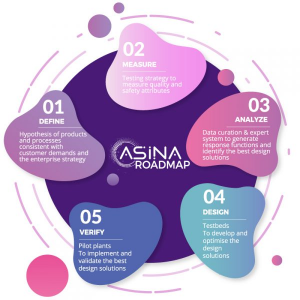
For this purpose, the proposal will take into consideration the important nano design features of coating and encapsulation and related Value Chains (VCs). ASINA will develop a specific Safe-by-Design Management Methodology, consistent with modern business management systems, to deliver Safe-by-Design solutions and inform design decisions. The project will establish a pilot action, involving test beds and pilot plants, for testing and validating the methodology contents as specific implementations that can be generalized to other engineered nanomaterials, nano-enabled products and industrial case studies. ASINA will finally export the methodology to the industry through a roadmap (including guidelines, analytical tools, best practices) and other standardization deliverables such as CEN-CWA, as a realistic way to ensure diffusion of the ASINA SMM and its industrial implementation worldwide.
PROJECT DETAILS:
PROJECT TITLE: Anticipating Safety Issues at the Design Stage of NAno Product Development
ACRONYM: ASINA
START DATE: 01 March 2020
END DATE: 28 February 2024
TOPIC: NMBP-15-2019 Safe by design, from science to regulation: metrics and main sectors (RIA)
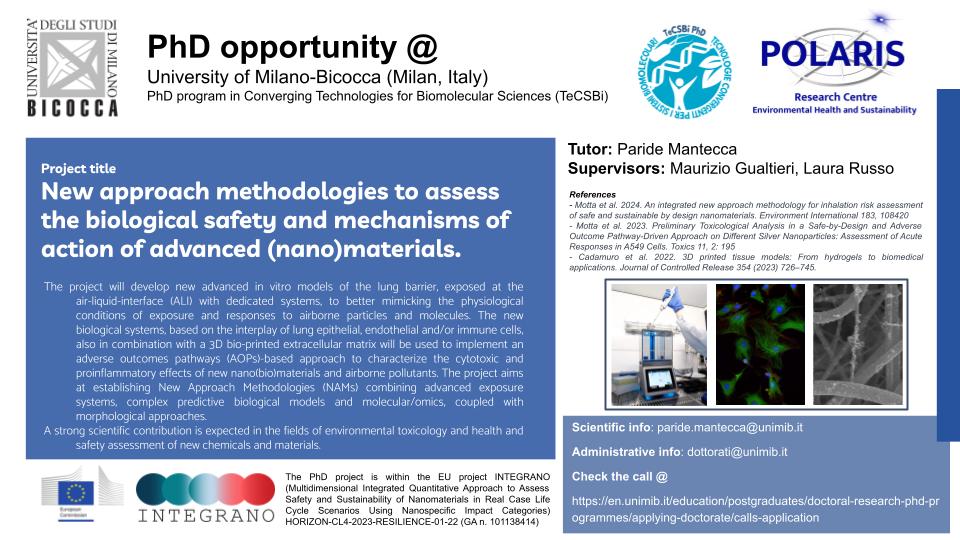
Project title: New approach methodologies to assess the biological safety and mechanisms of action of advanced (nano)materials
The project will develop new advanced in vitro models of the lung barrier, exposed at the air-liquid-interface (ALI) with dedicated systems, to better mimicking the physiological conditions of exposure and responses to airborne particles and molecules. The new biological systems, based on the interplay of lung epithelial, endothelial and/or immune cells, also in combination with a 3D bio-printed extracellular matrix will be used to implement an adverse outcomes pathways (AOPs)-based approach to characterize the cytotoxic and proinflammatory effects of new nano(bio)materials and airborne pollutants. The project aims at establishing New Approach Methodologies (NAMs) combining advanced exposure systems, complex predictive biological models and molecular/omics, coupled with morphological approaches. A strong scientific contribution is expected in the fields of environmental toxicology and health and safety assessment of new chemicals and materials.
The PhD project is within the EU project INTEGRANO (Multidimensional Integrated Quantitative Approach to Assess Safety and Sustainability of Nanomaterials in Real Case Life Cycle Scenarios Using Nanospecific Impact Categories), HORIZON CL 4 2023 RESILIENCE 01 22 (GA n 101138414).
Tutor: Paride Mantecca
Supervisors: Maurizio Gualtieri, Laura Russo
The selection for admission to the 40th cycle PhD programme in Converging Technologies for Biomolecular Systems (UNIMIB) is open.